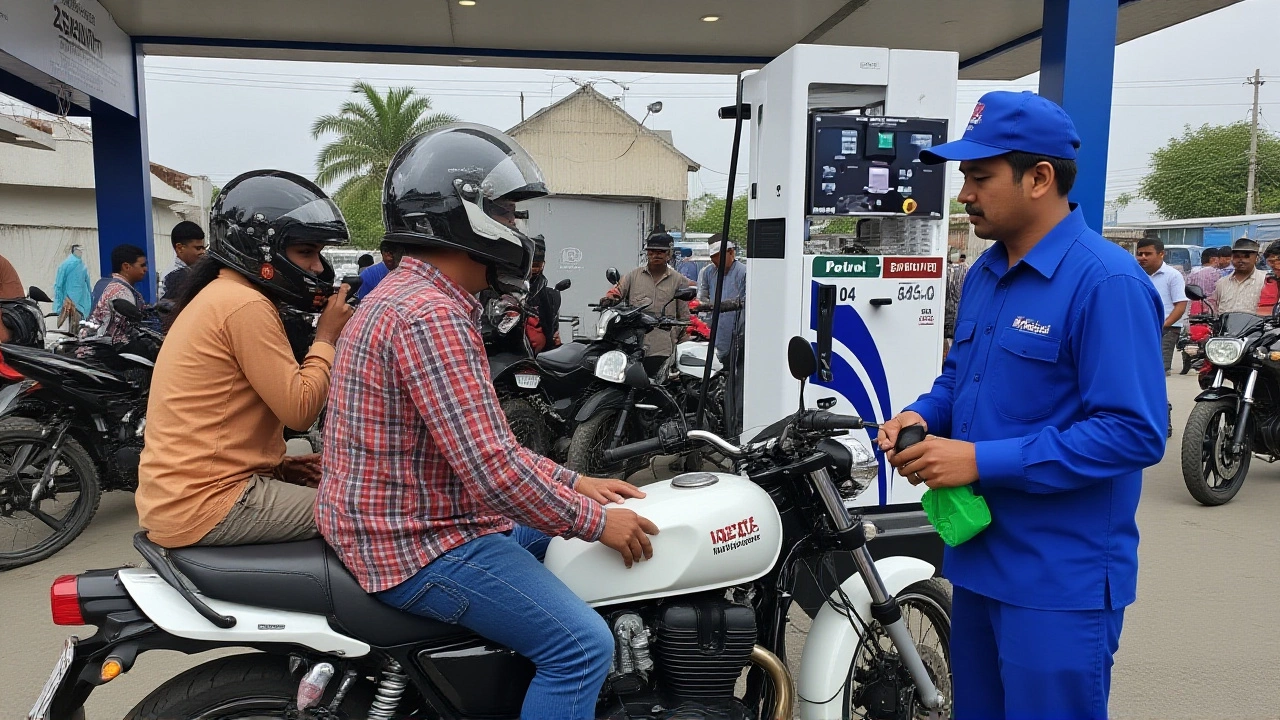
It’s the fourth time in just ten days. That’s how often fuel prices have jumped across India this week, leaving commuters and logistics operators reeling. On Monday morning, Lucknow saw petrol cross the psychological barrier of ₹102 per liter for the first time in recent memory, hitting exactly ₹102.05. Diesel followed suit, climbing to ₹95.55 a liter.
This isn’t an isolated incident confined to the capital of Uttar Pradesh. The surge is national. In New Delhi, petrol now costs ₹102.12 per liter, while diesel sits at ₹95.20. For context, since May 15, prices have been revised upward repeatedly, adding roughly ₹7.50 per liter to the pump price over a span of less than two weeks. It’s a relentless climb that feels less like market adjustment and more like a squeeze on household budgets.
The Numbers Behind the Hike
Here’s the thing about daily fuel revisions: they can be confusing. Different sources sometimes show slight variations based on when the data was pulled from the Oil Marketing Companies (OMCs). Live Hindustan reported the Lucknow petrol hike as ₹2.61 per liter, while Aaj Tak noted a sharper jump of ₹2.77 in a single day—from ₹99.28 on May 24 to ₹102.05 on May 26. GoodReturns Hindi listed the price at ₹101.86 for May 26, suggesting minor timing differences in updates.
Regardless of the decimal point debate, the trend is undeniable. Since the start of May 2026, Lucknow has seen petrol rise from ₹94.73 to over ₹101—a total increase of nearly ₹7.13 in just three weeks. In New Delhi, Indian Oil Corporation also hiked its premium fuels. XP95 petrol now costs ₹109.24 per liter, up ₹2.61, while XG premium diesel hit ₹100.52, up ₹2.71.
- Lucknow: Petrol ₹102.05/L, Diesel ₹95.55/L
- New Delhi: Petrol ₹102.12/L, Diesel ₹95.20/L
- Kolkata: Petrol ₹113.51/L (up ₹2.87), Diesel ₹99.82/L
- Chennai: Petrol ₹107.77/L (up ₹2.46), Diesel ₹99.55/L
Why Is This Happening Now?
Turns out, it’s not just domestic taxes driving these numbers. Reports from Live Hindustan point directly to rising crude oil prices in international markets. When global crude ticks up, Indian OMCs—like Indian Oil, BPCL, and HPCL—adjust their daily rates accordingly. This dynamic pricing model, meant to reflect real-time costs, ends up passing volatility straight to the consumer.
But wait, there’s more. The frequency of these hikes is unusual. Four increases in ten days suggests sustained pressure on global supply chains or geopolitical tensions affecting crude availability. While specific geopolitical triggers aren’t detailed in local reports, the correlation with global crude trends is clear. Experts warn that such rapid succession of hikes leaves little room for consumers to adjust.

A National Ripple Effect
The impact stretches far beyond Uttar Pradesh. Across India, major metros are seeing similar patterns. In Hyderabad, petrol touches ₹115.69 per liter. Nellore in Andhra Pradesh sees even higher rates at ₹117.06. Meanwhile, cities like Daman remain relatively cheaper at ₹99.50, highlighting the stark regional disparities caused by varying state VAT structures.
In Kolkata, petrol surged by ₹2.87 to ₹113.51, making it one of the most expensive capitals. Chennai saw a ₹2.46 jump to ₹107.77. Even smaller cities like Agartala in Tripura recorded a significant ₹2.98 hike, pushing petrol to ₹105.17. The message is consistent: no region is immune.
What Does This Mean for Your Wallet?
Let’s talk practicalities. If you drive a car with average mileage, filling a 45-liter tank now costs over ₹4,500 in Lucknow, compared to roughly ₹4,250 a month ago. That’s an extra ₹250 every fill-up. For logistics companies, this translates to higher freight costs, which eventually trickle down to the price of vegetables, electronics, and essentials.
YouTube news channels have highlighted public frustration, noting that this is the "fourth hike in 10 days." The sentiment is palpable. Commuters are feeling the pinch, and small business owners worry about margin erosion. As one analyst put it, "When transport costs rise, everything else follows. We’re looking at broader inflationary pressures ahead."

Background: The Daily Revision System
India adopted daily fuel price revisions years ago to align with global crude fluctuations. Previously, prices were fixed for two-week periods, leading to sudden, massive jumps. The current system smooths out shocks but creates a slow, steady bleed on wallets. Updates happen daily at 6:00 AM, issued by the OMCs. This means prices can change every single morning, depending on overnight global market movements.
Historically, prices fluctuate with currency exchange rates (since crude is bought in dollars) and global demand. However, the pace of recent increases is notable. Comparing May 1, 2026, to May 26, 2026, shows a cumulative rise that outpaces typical seasonal adjustments. This period marks a significant shift in the cost of living for millions.
Frequently Asked Questions
Why have fuel prices increased four times in ten days?
The frequent hikes are driven by sustained rises in international crude oil prices. Indian Oil Marketing Companies revise prices daily at 6:00 AM to reflect these global changes. When crude costs stay high for consecutive days, the daily adjustments accumulate, resulting in multiple hikes within a short period like ten days.
How much has petrol increased in Lucknow since May 1?
Since May 1, 2026, when petrol was priced at ₹94.73 per liter in Lucknow, the price has risen to approximately ₹101.86–₹102.05 by late May. This represents a total increase of about ₹7.13 to ₹7.32 per liter over just three weeks, marking a significant upward trend.
Which city has the highest petrol price currently?
Based on recent data, Nellore in Andhra Pradesh has one of the highest petrol prices at ₹117.06 per liter. Other expensive cities include Palakkad in Kerala at ₹115.18 and Hyderabad at ₹115.69. These high prices are due to a combination of central taxes and higher state Value Added Tax (VAT).
Will fuel prices decrease soon?
There is no immediate indication of a price drop. As long as international crude oil prices remain elevated, daily revisions will likely continue to favor higher rates. Consumers should expect volatility rather than stability in the short term, unless global supply conditions improve significantly.
How does this affect common people?
Higher fuel prices directly increase commuting costs for individuals and raise transportation expenses for goods. This leads to secondary inflation, where the cost of food, groceries, and services increases because logistics become more expensive. Household budgets are strained, particularly for those who rely heavily on private vehicles or daily wage earners traveling long distances.