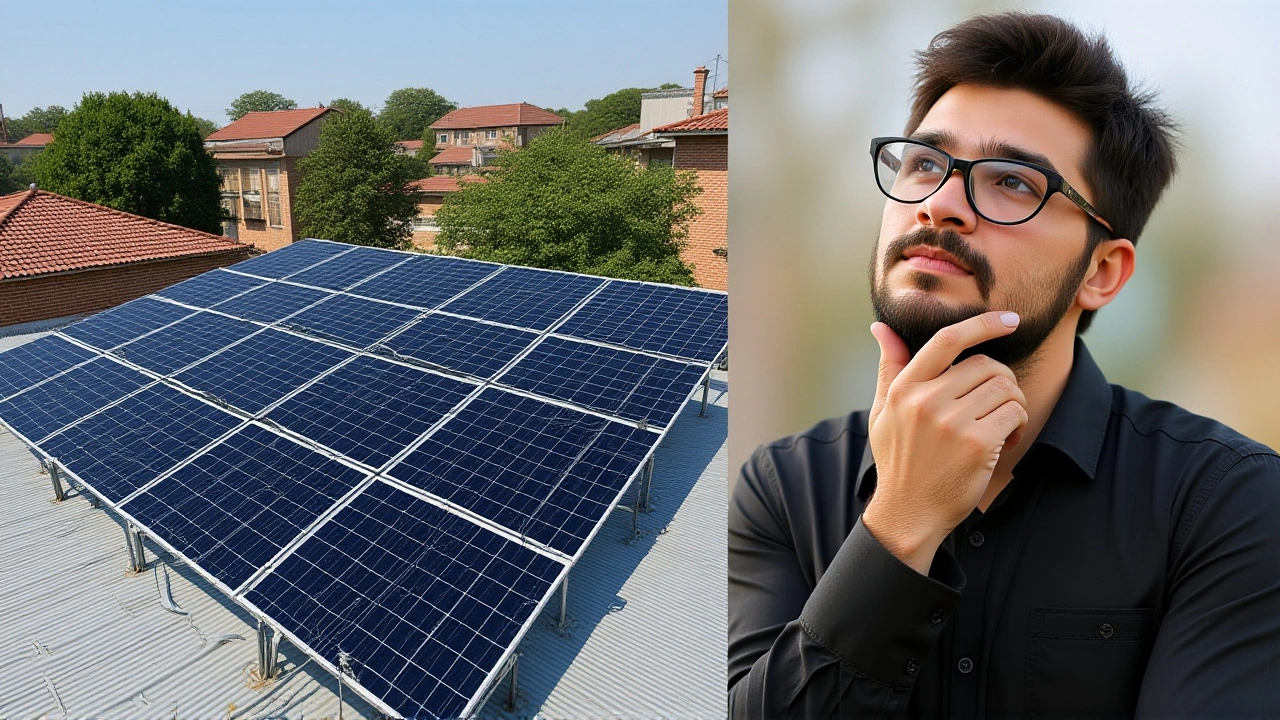
Here’s the thing about solar panels: installing them is only half the battle. If you’re already sitting on a rooftop array but your electricity bills aren’t dropping as fast as you’d hoped, you might be leaving money—and megawatts—on the table. Recent insights from energy experts and engineering studies suggest that simple "hacks" can significantly boost both power generation and system longevity.
It turns out that how you maintain, position, and even cool your panels matters just as much as the hardware itself. From timing your cleaning routine to adopting new thermal management techniques, these adjustments are making waves in the renewable energy community.
The Hidden Cost of Dirty Panels
Dust, pollen, and bird droppings are silent killers of solar efficiency. A layer of grime can block sunlight absorption, reducing output by up to 25% in dusty regions. But here’s the twist: when you clean them matters more than you think.
Experts recommend cleaning your panels either early in the morning or late in the evening. Why? Because hosing down hot panels with cold water during peak sun hours can cause thermal shock, potentially cracking the glass or damaging the cells underneath. Plus, water evaporates too quickly at midday, leaving behind mineral stains that attract even more dirt. It’s a vicious cycle.
"Think of it like washing your car," explains one industry veteran. "You wouldn’t do it under the blazing noon sun. Same logic applies here."
Placement Is Everything
If you’re reading this after installation, don’t panic—but if you’re planning an upgrade, pay attention. The angle and orientation of your panels dictate how much direct sunlight they capture throughout the year. In the Northern Hemisphere, facing south with a tilt matching your latitude is generally ideal. However, local obstructions like trees or neighboring buildings can drastically alter this equation.
Recent data shows that optimizing placement can increase annual energy yield by 10-15%. For a typical home system generating 6,000 kWh per year, that’s nearly 900 extra kilowatt-hours—enough to power an average household for three months. And yes, shading from just one leafy branch can disproportionately affect entire string circuits.
Cooling Down for Better Performance
Solar panels hate heat. Counterintuitive, right? They need light, not warmth. As temperatures rise above 25°C (77°F), photovoltaic cell efficiency drops by approximately 0.4-0.5% for every degree Celsius increase. That’s why summer days, despite their abundance of sunshine, often see lower-than-expected yields.
This brings us to some fascinating research coming out of Ithaca, New York. Researchers there tested a low-cost innovation using phase change material patches attached to the back of commercial panels. These materials absorb excess heat as they melt, keeping the panel cooler without active cooling systems.
The results were striking: operating temperatures dropped by about 5°C, leading to a 1.55% efficiency gain and a projected 75% increase in lifespan under typical summer conditions. While still emerging, this approach could become standard practice within the next decade.
Smart Storage Solutions
Generating power is useless if you can’t store it. Many homeowners overlook battery storage until it’s too late. Modern lithium-ion batteries paired with smart inverters allow you to shift consumption patterns, storing excess daytime production for nighttime use.
But there’s another angle: portable solar setups. Articles highlighting "life hacks" for portable solar note that users can simultaneously charge devices and power small appliances like stoves. This dual-use capability maximizes utility, especially for off-grid enthusiasts or those living in apartments where fixed installations aren’t feasible.
For urban dwellers, flexible solar panels offer creative mounting options on balconies or walls. These thinner, lighter alternatives may have slightly lower efficiencies but open up possibilities for renters and apartment owners previously excluded from solar benefits.
What Experts Are Saying
Dr. Elena Martinez, a renewable energy analyst at GreenTech Insights, emphasizes that most performance losses stem from neglect rather than technology failure. "People install and forget," she says. "Regular maintenance, strategic positioning, and exploring passive cooling methods can extend system life and improve ROI significantly."
She also points out that while advanced solutions like phase change materials are promising, basic practices remain foundational. "Don’t wait for high-tech fixes. Start with proper cleaning schedules and shade analysis. Those free improvements often deliver the biggest immediate returns."
Future Implications
As solar adoption accelerates globally, so does the demand for optimization strategies. Governments and utilities are beginning to incentivize not just installation, but ongoing performance monitoring. Smart sensors that track temperature, dust accumulation, and voltage fluctuations are becoming cheaper and more accessible.
In India alone, over 40 GW of solar capacity was installed by early 2024, according to Ministry of New and Renewable Energy data. With millions of households now relying on solar, maximizing each system’s potential becomes critical—not just economically, but environmentally.
Looking ahead, we expect to see integrated AI-driven maintenance platforms that alert users when cleaning is needed or when panel degradation exceeds normal thresholds. Until then, sticking to proven hacks remains the best bet for everyday users.
Frequently Asked Questions
How often should I clean my solar panels?
Most experts recommend cleaning twice a year, though areas with heavy pollution, monsoon seasons, or frequent bird activity may require quarterly maintenance. Always clean during cooler parts of the day—early morning or late evening—to prevent thermal stress on the panels.
Can dirty solar panels damage the system permanently?
Not directly, but prolonged dirt buildup reduces efficiency and forces other panels in the same circuit to compensate, which can lead to overheating and accelerated wear. Bird droppings, if left untreated, can also corrode protective coatings over time.
Do phase change material patches really work for residential systems?
While currently more common in experimental or commercial settings, early tests show promise. The 5°C temperature reduction observed in Ithaca trials translated to measurable efficiency gains. As costs decrease, DIY kits may emerge for homeowners seeking passive cooling solutions.
Is it worth investing in battery storage if I already have solar panels?
Absolutely. Without storage, excess daytime generation feeds back into the grid at low feed-in tariffs. Batteries let you self-consume that energy during peak evening hours, cutting reliance on expensive grid power and providing backup during outages.
Can apartment residents benefit from solar hacks?
Yes! Flexible solar panels can be mounted on balconies or windowsills. Portable units allow simultaneous device charging and appliance powering. Even small-scale setups can offset significant portions of household consumption, especially when combined with smart usage habits.